



AzTU Researchers' Study on Artificial Intelligence Published in Q1 Journal
Researchers from the Institute of Cybersecurity and Defense Technologies at Azerbaijan Technical University (AzTU), Hikmat Karimov and Rahid Alekberli, have conducted a new study examining the conditions under which artificial intelligence could gain authority in future decision-making processes.
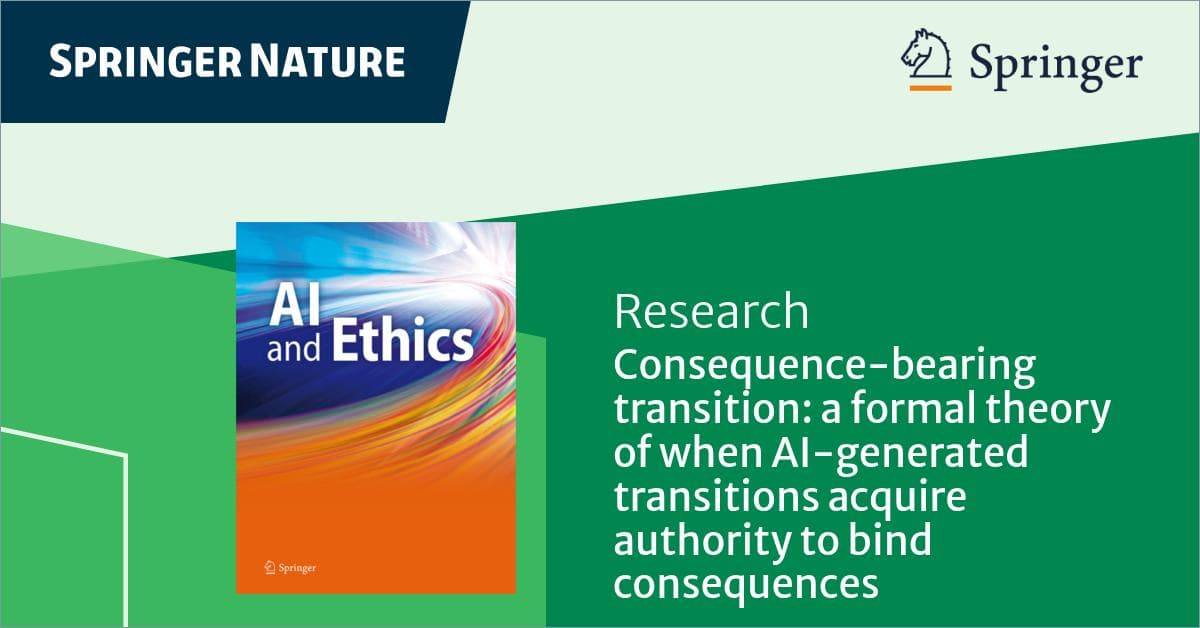
The study, titled "Consequence-Bearing Transition: A Formal Theory of When AI-Generated Transitions Acquire Authority to Bind Consequences," was published in the international scientific journal AI and Ethics. Published by Springer Nature, the journal specializes in the ethics, safety, governance, and regulation of artificial intelligence and ranks among Q1-tier scientific publications.
The paper examines the conditions under which the decisions and recommendations produced by artificial intelligence are translated into real decisions that directly affect the actions of individuals and organizations.
According to the authors' approach, a decision generated by artificial intelligence does not automatically become a decision executed in the real world. Factors such as the data and evidence a decision is based on, the reliability of that data, the significance of its possible consequences, and the presence of human oversight all play a crucial role in this transition.
The study proposes a new theoretical framework for these questions — one that allows the transition of an AI-generated output from the information-and-recommendation stage to a decision with real consequences to be assessed systematically.
The research is especially timely at a time when artificial intelligence systems are making increasingly autonomous decisions and reshaping the human role across a range of processes. The authors emphasize that, alongside the advancement of these systems, it is equally important to establish the scientific and governance mechanisms that determine under what conditions AI-made decisions may be applied.
The approach proposed in the article lays a theoretical foundation for future research on AI governance, safety, and human oversight. One of the study's key conclusions is that the decision-making capacity of artificial intelligence must be evaluated not only in technical terms, but also with regard to the real-world consequences such decisions may produce.
AI and Ethics is published by Springer Nature and features international research on the ethics, governance, and societal impact of artificial intelligence. In 2025, articles in the journal were downloaded more than 2.1 million times, and its content is indexed in a number of international scientific databases.